
Lesson 4 of 6 · Social search and brand discovery
Find the topics and formats worth repeating
What it is
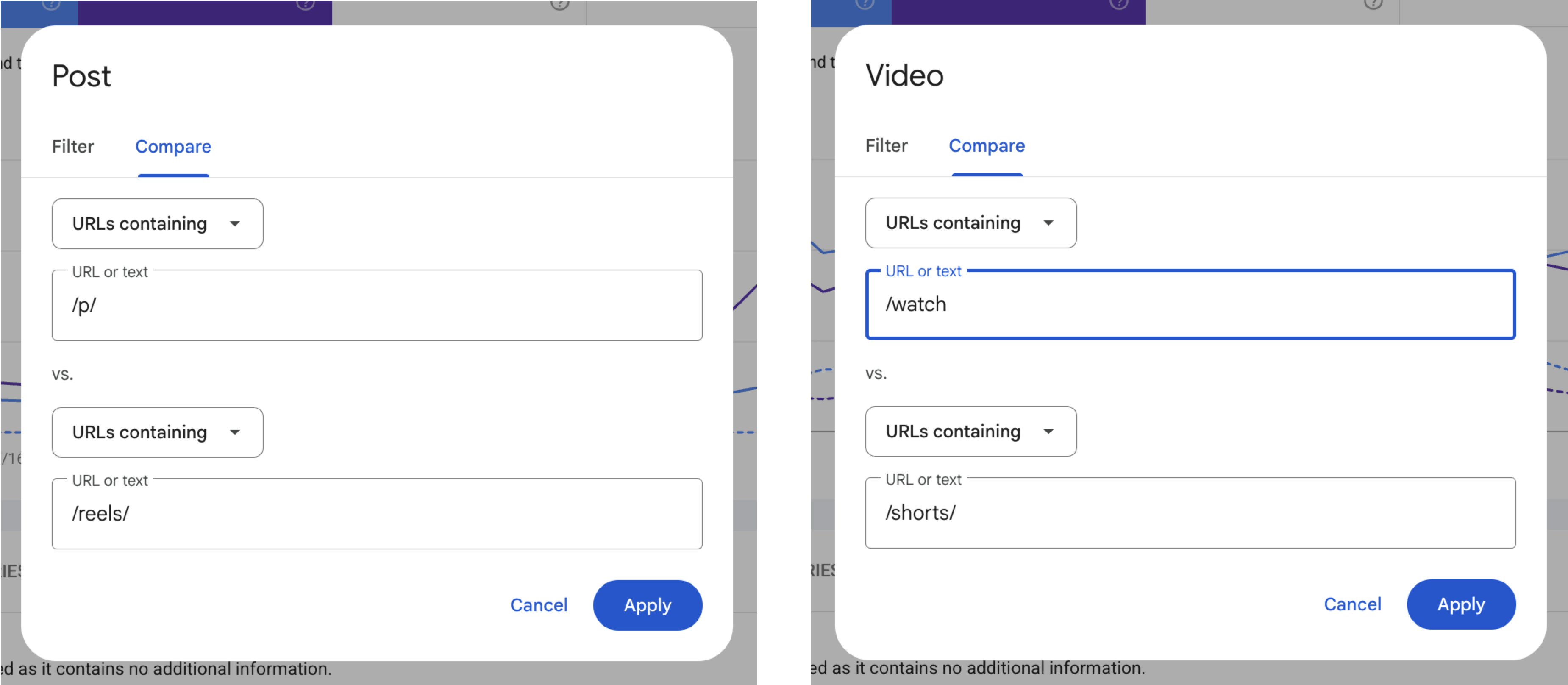
Use matching date ranges when comparing posts. In Performance, use the Pages filter and compare content URLs or URL patterns. Google's guide illustrates Instagram /p/ versus /reels/ and YouTube /watch versus /shorts/. Check that those patterns actually match URLs in your own report before using them. Look at queries alongside the content. A post about a noisy pipe might attract a different audience from a post about booking a plumber. Separate useful service-area interest from broad how-to traffic. A country filter is not a city-level ranking check. The screenshot is Google's example of the comparison controls. It illustrates filtering, not a result or a recommendation for your account. Google's filtering and comparison guide.
Why it matters
Comparisons help you reuse a useful topic in a different format. A short clip may introduce the problem while a longer video explains it carefully.
✓ Good example
Maple Leaf Plumbing & Heating compares its explanatory videos with short clips over the same period, then checks which topics fit the services and places it genuinely covers.
✗ Common mistake
Declaring short videos the winner from two days of partial data, or treating a high average position as proof the business wins Google Maps locally.
You pass when: You have identified one matched-period comparison and written down what the numbers do not tell you.