
How to Get New Pages Indexed by Google, Brave, Bing and AI Search (Without Gimmicks)
Submission tools ask search engines to crawl a page; they cannot force indexing. Here is what each one really does, the four blockers to fix first, and a free indexer to do it all in one place.
By Local-SEO.com · Published · 3 min read
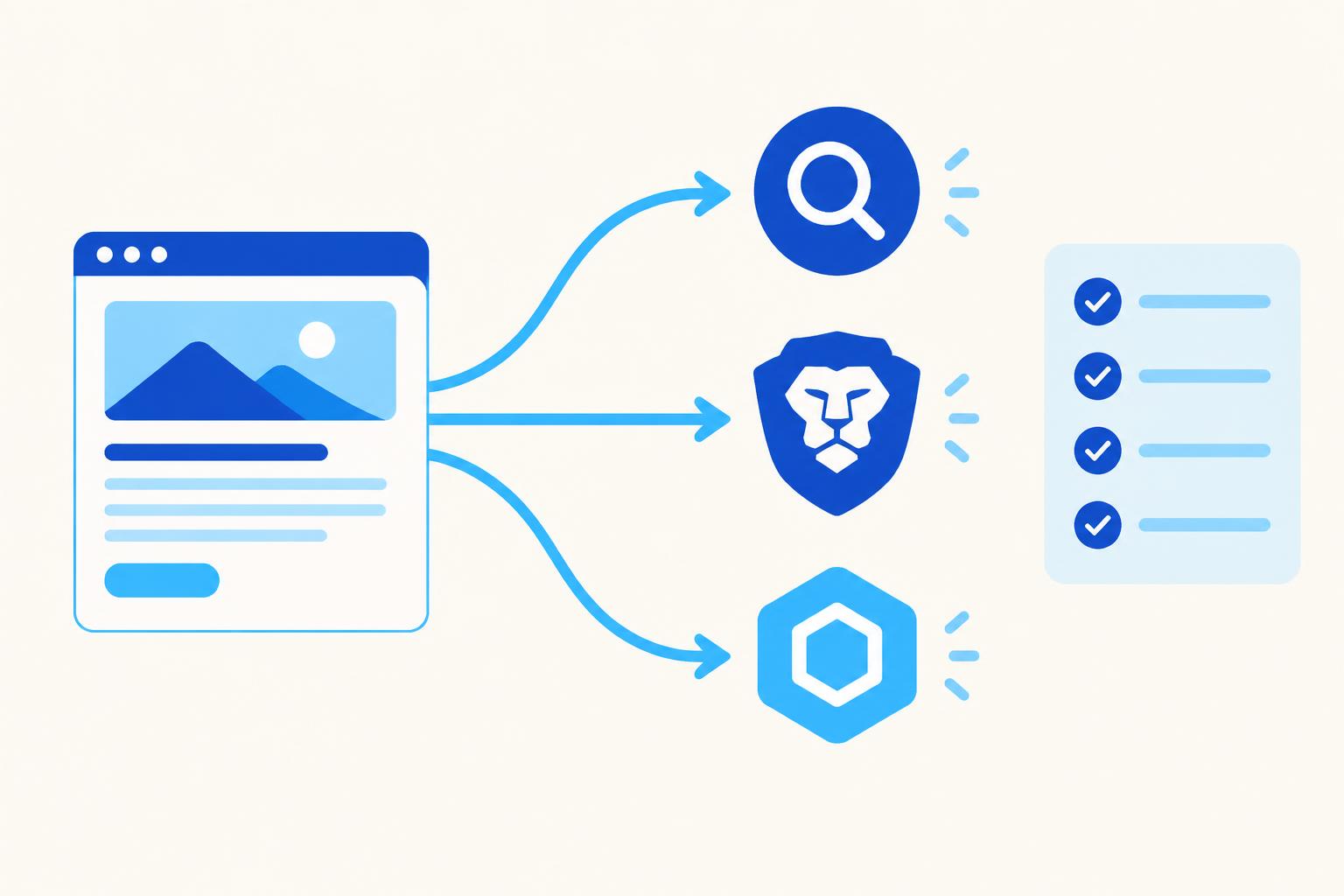
Open the free page indexer to check a page and send it to search engines in a couple of minutes.
You publish a new service page, wait a week, search for it and find nothing. It is tempting to look for a button that forces the page into Google. Viral posts promise exactly that. The truth is calmer and more useful: you can ask search engines to crawl a page, and you can remove the things that stop them, but nobody can force indexing.
Crawling, indexing and ranking are three different steps
A crawler has to find the page, the search engine has to decide it is worth keeping, and only then can it rank. Submission tools help with the first step. Quality, internal links and trust decide the second and third.
The four silent blockers
Most pages that "will not index" are blocked by something on the site itself. Check these first:
- An error or redirect. The address must load with a normal 200 status. If it redirects, submit the final address.
- A noindex tag. Staging sites and page builders often leave a robots meta tag or X-Robots-Tag header set to noindex.
- A canonical pointing elsewhere. If the canonical tag names another page, search engines will usually index that one instead.
- A robots.txt block. A disallow rule for Googlebot, Bingbot or Bravebot stops the crawl before it starts.
Our free indexer checks all four, plus whether robots.txt lists your sitemap.
Bing and IndexNow: the fastest notification
IndexNow is an open protocol. You upload one small key file to prove you own the site, then send a page address. Bing, Yandex, Seznam and Naver share those notifications, usually within seconds. Bing results also feed several AI assistants, so this is worth doing for every new or changed page.
Google: URL Inspection and sitemaps
Google does not take IndexNow. Use URL Inspection in Search Console and press Request Indexing for important pages, and keep an up-to-date sitemap submitted. Avoid tools that push ordinary pages through Google's Indexing API; that API is meant for job postings and live events, not service pages.
Brave: a quick, legitimate re-fetch request
Brave runs its own independent index rather than renting Google's or Bing's, and that index is used by AI answer tools. Its submit form asks Bravebot to re-fetch a page. It is a nudge, not a guarantee, but it takes ten seconds and costs nothing.
A worked example
Maple Leaf Plumbing & Heating in Canton, Ohio adds a new trenchless sewer repair page. Before announcing it, the owner:
- Runs the page through the indexer and finds the page builder left a noindex tag on it. He removes it.
- Links to the new page from the main services page and the homepage, so it is not an orphan.
- Uploads the IndexNow key once and submits the page, then opens URL Inspection in Search Console and the Brave form.
- Adds the new service to the business's chamber of commerce listing, its Google Business Profile services and the regional directories it already belongs to, using the same name, address and phone number everywhere.
- Checks a site: search on Google, Bing and Brave a few days later.
Why directories help new pages get found
Search engines and AI tools trust pages more when other trusted sources describe the same business in the same way. A local chamber of commerce listing, followed by relevant regional and industry directories, gives crawlers more paths to your site and gives AI tools consistent facts to match. Browse our directory finder for listings that fit your area and industry.
Keep watching after the page is indexed
Indexing is the start. To see whether the page actually begins to show for the searches that matter, in Google, in Maps and in AI answers, track it over time. Local-SEO.com's monthly plans keep dated rankings and AI checks together so you can see the change, not guess at it.
Have a story or tip? Write for us.