
Directories and Citations: the Quiet Signal That Decides Who Gets Recommended
Directory listings feel outdated, but Google and AI assistants read them constantly. Here is why matching NAP and corroborating descriptions decide who gets recommended, and how to audit your own listings.
By local-SEO.com Editorial Team · Published · 4 min read
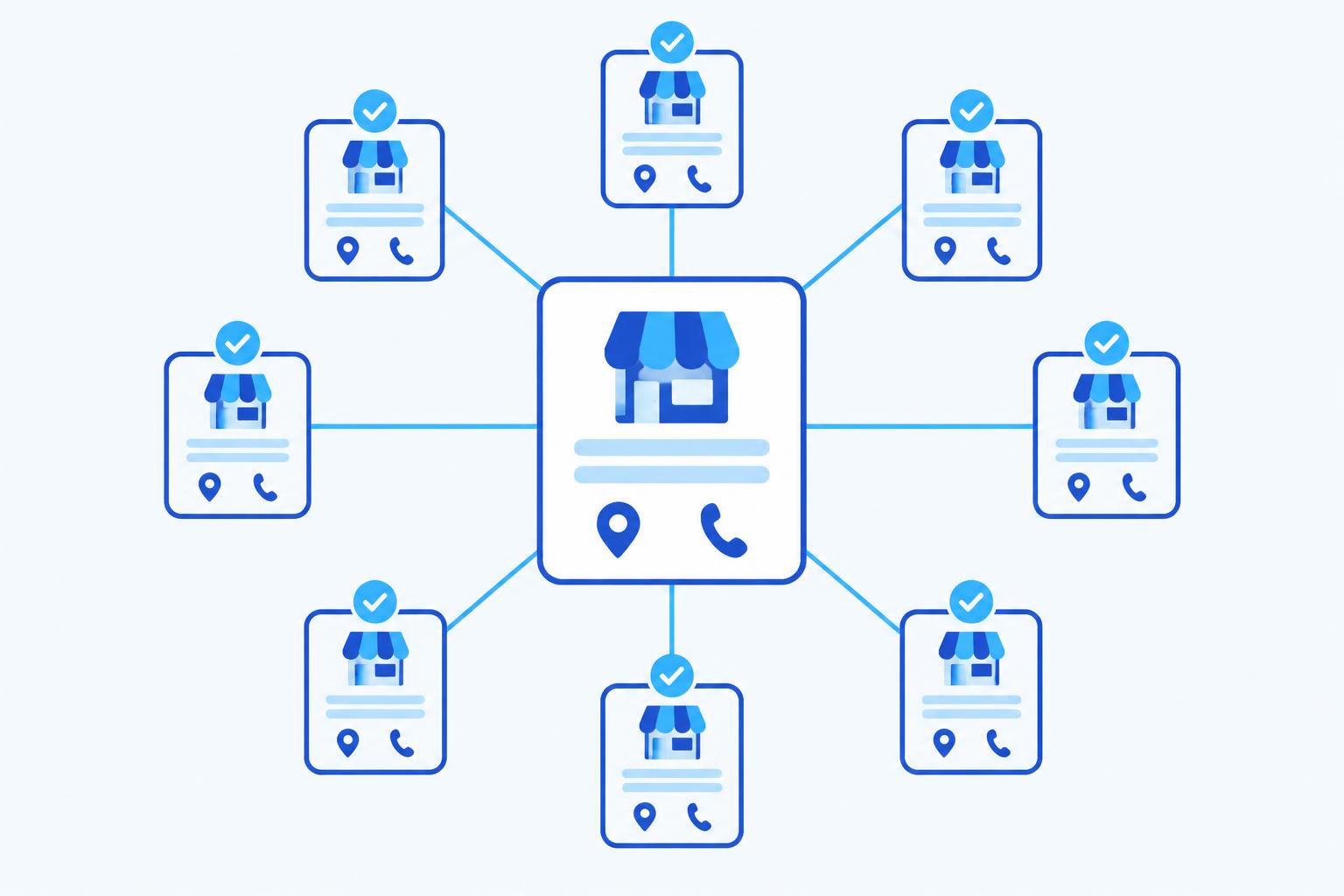
When did you last look up a business in a printed directory? For most people the answer is years ago, and that is exactly why so many businesses have let their directory listings rot. The irony is that directories matter more now than they did then. People may not browse them, but Google and AI assistants do.
What a citation really is
A citation is any mention of your business name, address and phone number (NAP) on another website: a directory listing, a chamber of commerce member page, a trade association profile. Your website tells search engines what you say about yourself. Citations tell them what independent sources confirm about you. That distinction is the whole game.
When ChatGPT, Perplexity or Google's AI features try to verify that a business is real, active and operating in a specific place, they look for corroboration across third-party sources. Multiple independent sources pointing to the same business with the same information is a signal of legitimacy your own website cannot provide on its own. And when those sources disagree, the AI gets hesitant. A hesitant AI does not make recommendations.
The NAP problem
Take a fictional example: Maple Leaf Plumbing & Heating in Canton, Ohio. On Google Business Profile it is "Maple Leaf Plumbing & Heating, 1420 Market Ave N, Canton, OH 44702, (330) 555-0142". On Yelp someone entered "Maple Leaf Plumbing and Heating". An old chamber listing says "Maple Leaf Plumbing" at "1420 Market Avenue North" with a tracking number the office stopped using two years ago.
To a person, those are obviously the same business. To software cross-checking dozens of sources, they might be three. Every variation spends a little of the trust you have built. The fix is boring but high leverage: pick one canonical version of your name, address and phone number, usually whatever is on your Google Business Profile, and make every other listing match it character for character. Not similar. Identical.
Try the checker below with your own listings to see how small differences stack up.
Descriptions that corroborate each other
Matching NAP is the floor, not the ceiling. The listings that do the most work are the ones whose descriptions, categories and services line up with everything else about you online.
If your Google Business Profile says you do furnace repair, boiler installation and emergency callouts in Canton, and your website has a service page for each, then a chamber of commerce profile describing "plumbing, heating and furnace repair serving Canton and Stark County" is corroboration. Three independent sources telling the same story about what you do and where you do it. Search engines and AI assistants can match all of it to one entity, which is what entity matching means in practice, and it feeds both local rankings and AI citations.
Two cautions. First, rich does not mean stuffed. List your real services in plain language; a description crammed with keywords for work you do not actually do reads as spam to reviewers and algorithms alike. Second, keep the story current. When you add a service or move premises, every listing needs the same update, which is why you should keep a simple record of every listing and its login.
Which directories deserve your time
Start with your Google Business Profile; it is the single most important listing for local search. Then, in rough order:
- Your local chamber of commerce. Membership usually includes a directory listing, and chambers are exactly the kind of trusted, established source search engines and AI assistants use to confirm a business is real.
- Reputable local and regional directories. For Ohio businesses, examples include toptenohio.com, discoveramish.com and yourstark.com. Elsewhere, look for your city or region's equivalent.
- Industry directories. For manufacturers, USA-mfg.net and ohiomanufacturers.com; for other trades, your association's member directory.
- The big general platforms. Yelp, the Better Business Bureau, Bing Places and Apple Maps. Bing Places feeds Microsoft's Copilot and Apple Maps powers Siri, so both matter more for AI answers than their visitor numbers suggest.
Why this is not just an SEO chore
Directories earn their keep in three different languages:
- Sales: people browsing a directory are already looking for a supplier. Every view is a potential enquiry, not a casual visit, and contact requests route straight to you.
- Marketing: a complete listing is a permanent, credible profile page you can link from quotes, emails and follow-ups, and your name stays consistent everywhere buyers and AI answers look.
- Leadership: it is a low, measurable cost. You can see the enquiries listings bring in, and accurate third-party profiles protect your reputation with new customers, partners and even hires.
How to audit your listings this week
- Search your business name on Google and note every directory that appears.
- Search your phone number and your address separately. You will find listings you did not know existed: some accurate, some outdated, some wrong.
- Claim each listing, complete every field, and make the details match your Google Business Profile exactly.
- Write one clear description of your services and service area, then reuse it, adjusted to each site's format, so every listing tells the same story.
- Keep the list of listings and logins somewhere safe, and update all of them when anything changes.
If you want the short version done for you, our citation scanner finds your existing listings automatically, and the $29 Local SEO Audit checks your listings, profile, website and positions in one report. Prefer to do it yourself? The free Google Business Profile Basics course walks through claiming and verifying your profile, keeping your name, address and phone identical everywhere, and optimising your listing, step by step, with no login needed.
Try it: do your listings match exactly?
Enter your name, address and phone as they appear on your Google Business Profile, then add how they appear on other directories. Nothing you type leaves this page.
2 of 2 listings differ from your reference. Fix the listing, not the reference.
Small differences count: "Ave N" vs "Avenue North", "&" vs "and", a tracking number vs your real number. To a search engine or AI assistant cross-checking sources, those can look like different businesses.
About local-SEO.com Editorial Team
The local-SEO.com editorial team covers search and AI updates that affect local businesses and the agencies that serve them.
Have a story or tip? Write for us.